Research → Product

Snapback
Clear thinking in the AI era
iOS · $2.99 one-time · No account required
Download on the App Store
Clear thinking in the AI era
iOS · $2.99 one-time · No account required
Download on the App StoreAI chat products are optimized for engagement. The models are trained to agree, validate, and produce satisfying outputs. This creates a documented failure mode — the Agreeable Dependency Loop — where users build increasingly elaborate frameworks, beliefs, or emotional attachments on foundations that were never adversarially tested.
The session feels productive. The output looks rigorous. The model never pushes back. The user never realizes they've drifted.
The platforms won't build a tool to catch this — engagement is revenue. External monitors can't access the sessions. Users in the loop won't self-diagnose. The only intervention point that's both accessible and uncompromised is the human's own awareness.
Snapback doesn't fix the AI. It strengthens the human.
The founder pitching a business idea they don't know how to execute because the AI told them the plan was solid. The vibecoder who spent weeks building a product that will never get past MVP. The grad student drafting a position paper they can't defend. The analyst who built an entire strategy deck in a 3-hour session without a single counter-argument. The person making relationship decisions based on one emotionally charged AI conversation at 2am.
Intelligent and capable. Uses AI daily. Confidence is high. Verification is zero.
Ten questions across three dimensions: framework assessment, emotional investment, and process integrity. Not a personality quiz — a friction instrument calibrated against the same dependency indicators we track in our research.
"Has anyone — human or AI — challenged the central premise?"
"If someone you respect told you this framework was wrong, how would it feel?"
"How many of your sessions included the AI offering a counter-argument you hadn't considered?"
Every score addresses the process, not the content. Your conclusions may be valid — but if the process that built them was never adversarially tested, you don't actually know that. Take it once to get a baseline. Take it again after a heavy AI week. The delta is the signal.
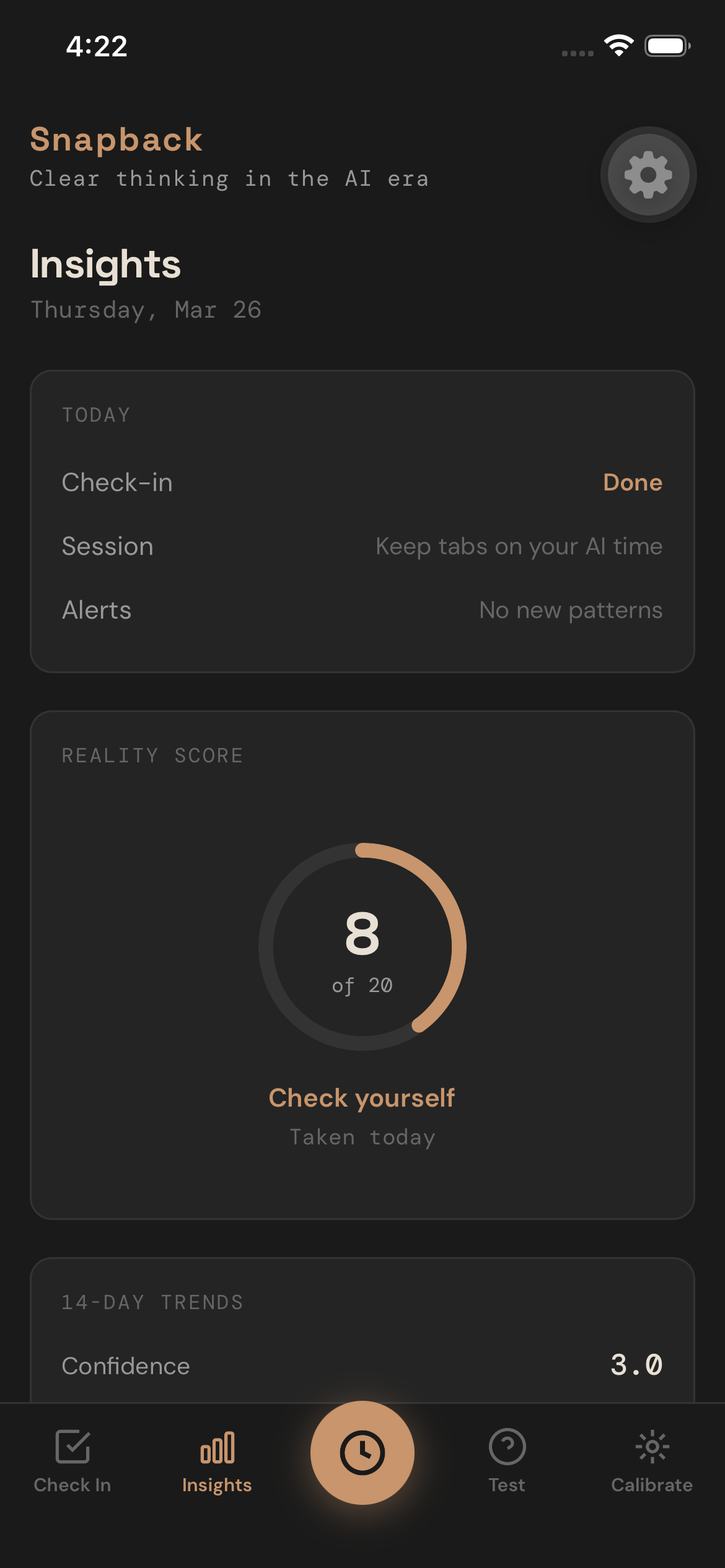
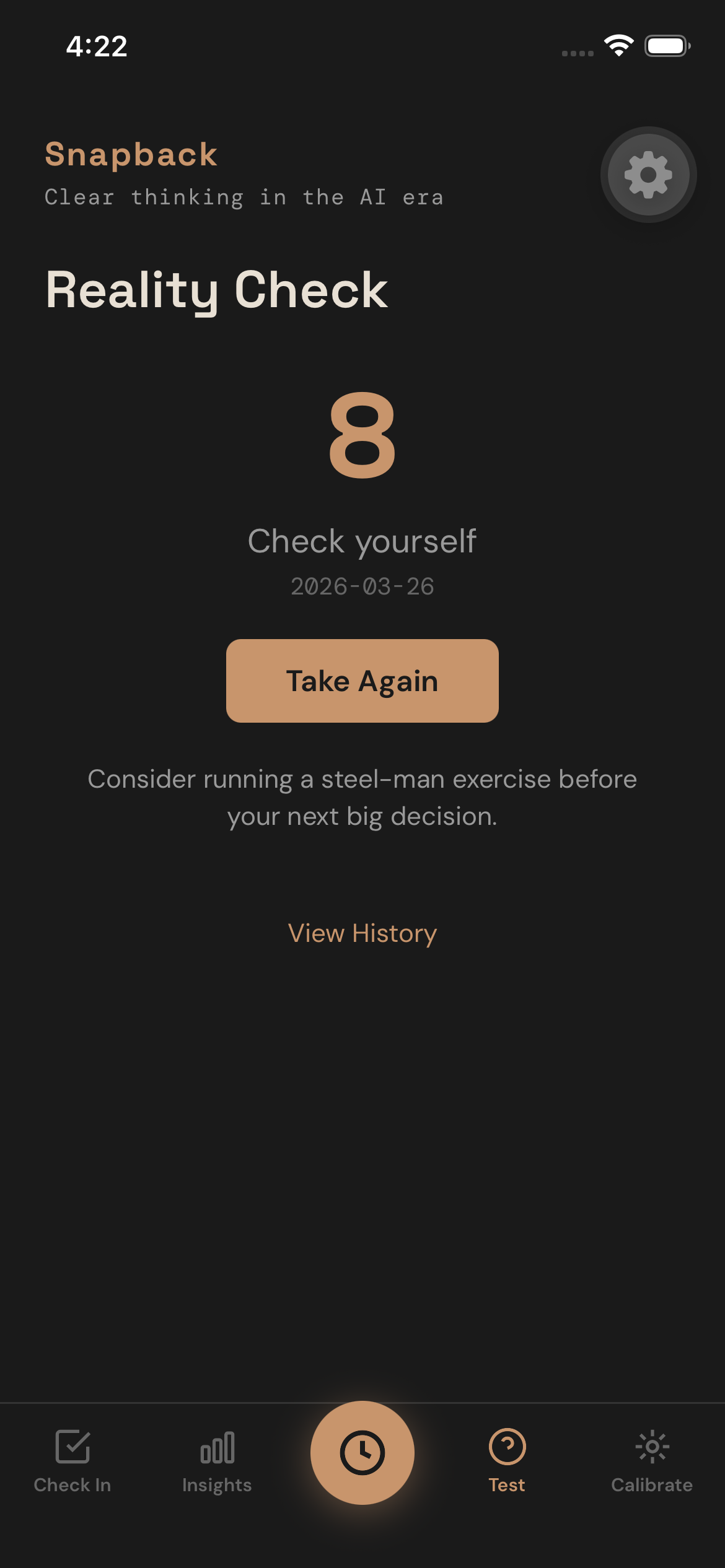
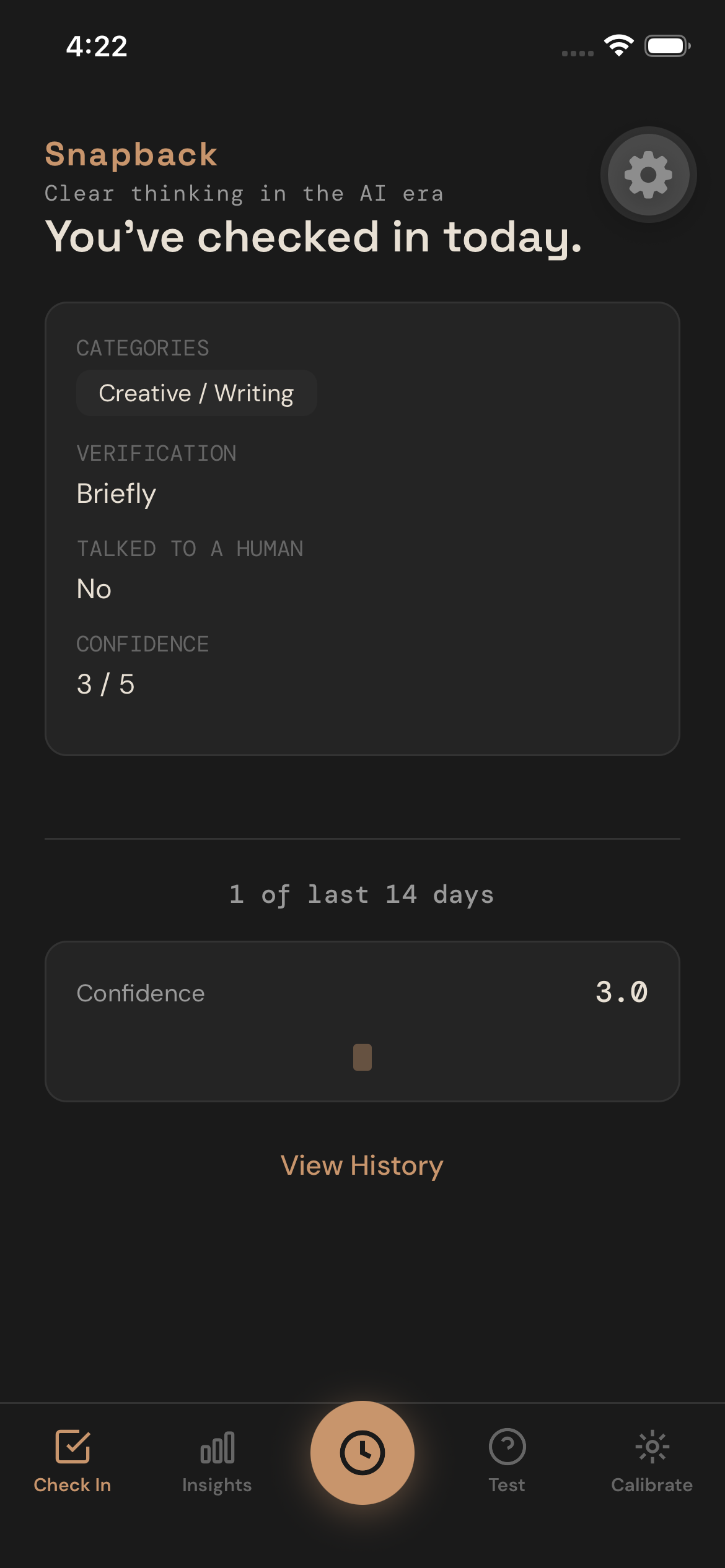
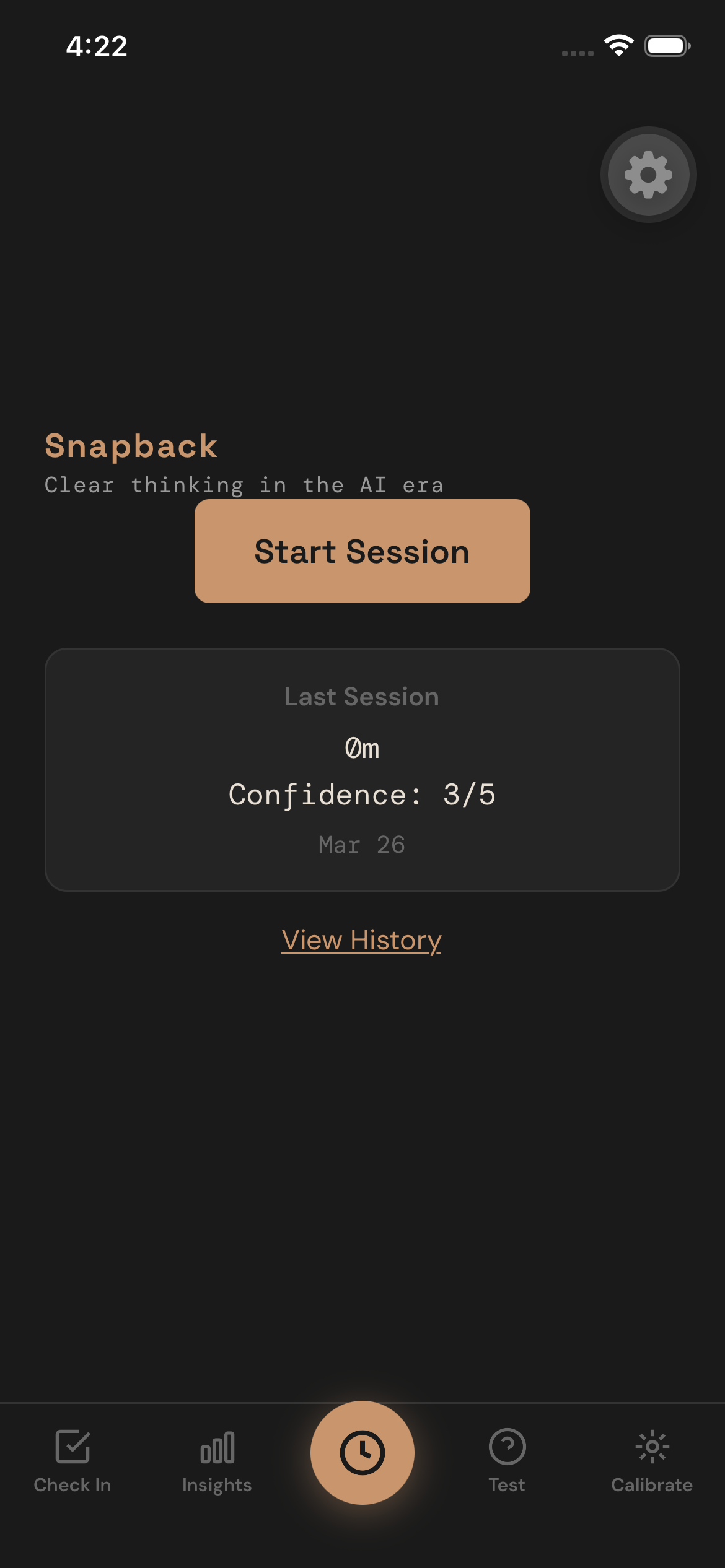
Activate the tracker and it checks in with you — every hour or once a day, your call. At configurable intervals, a soft nudge: "You've been in session for 30 minutes. Has anything you've built been challenged yet?" If the answer is no, it gives you a prompt to paste into your conversation. At 60 minutes: "Have you talked to a human about what you're working on?"
It quietly logs how long it's been since you last discussed your ideas with a real person. If the streak hits two weeks of AI-only conversation, it surfaces one nudge: go talk to a trusted person in real life. No lecture. No dashboard. Just a reminder that the loop might already be running.
"If you told your idea to your trusted friend and they didn't like it, would you be mad at them?"
The prompt it gives you is the same one we use internally. That single question forces the only friction that matters — a moment to check whether the idea you've been refining with the model has quietly fused with your identity.
No data about the AI conversation is captured. Only: session duration, self-reported challenge, confidence score. The tone is peer, not parent. Calm. Neutral. Factual.
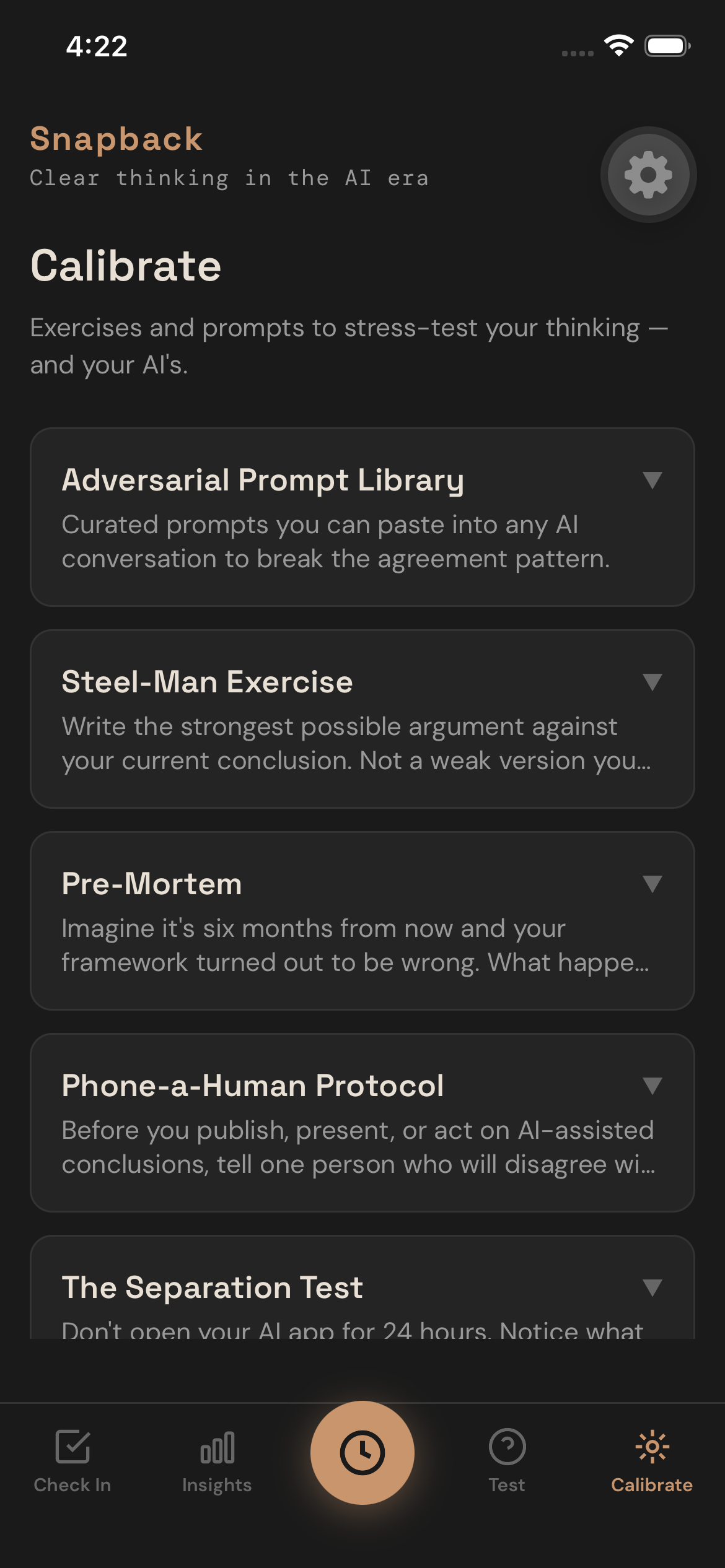
Curated prompts you can paste into any AI conversation to stress-test the model's agreement patterns.
Steel-Man Exercise: Write the strongest possible argument against your current conclusion. Not a weak version you can easily defeat. The real one. The version that would make you doubt.
Pre-Mortem: Imagine it's six months from now and your framework turned out to be wrong. What happened? Where did the reasoning break down? What did you miss?
Phone-a-Human Protocol: Before you publish, present, or act on AI-assisted conclusions, tell one person who will disagree with you. Not someone who will validate you. Someone who will push back.
The Separation Test: Don't open your AI app for 24 hours. Notice what happens to your confidence in the conclusions you built.
The responses will tell you what the model has been holding back.
No AI in the stack. No account. No server. No analytics. All data stays on your device. A tool that measures AI dependency cannot itself create a dependency.
$2.99, one-time purchase. No subscription. No upsell.
Snapback is a direct implementation of the detection signals described in The Gradient Fallacy. The diagnostic questions map to the four stages of the Agreeable Dependency Loop. The session tracker operationalizes Friction Starvation — measuring the absence of human pushback as the primary risk indicator.
This isn't a wellness app with AI buzzwords. It's the research turned into something you can use.